












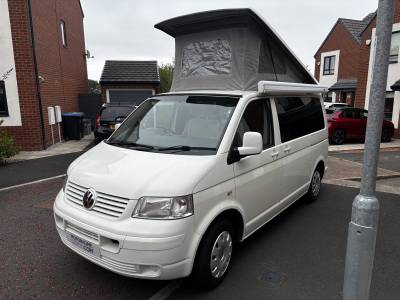
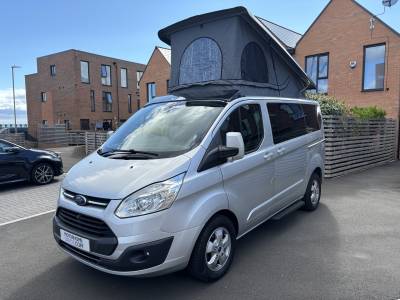
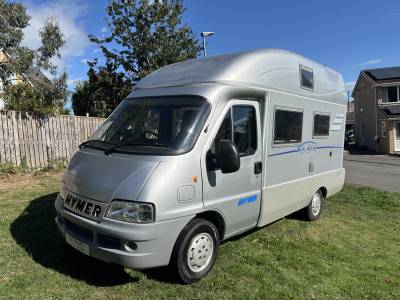

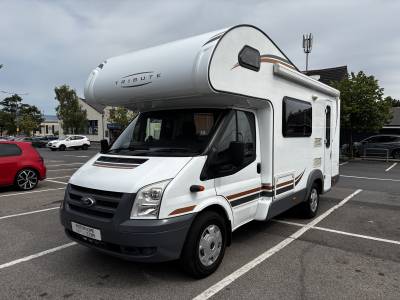










Motorhomes For Sale Near Me
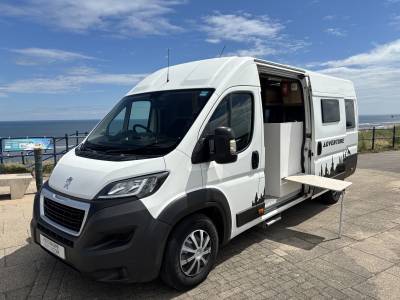
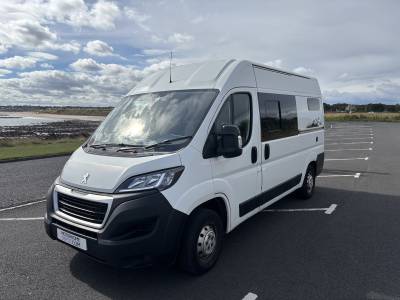
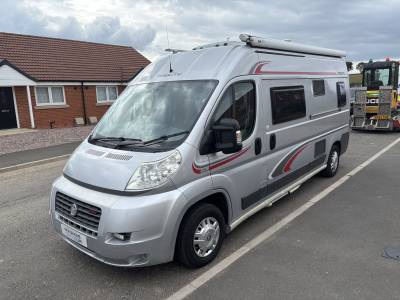
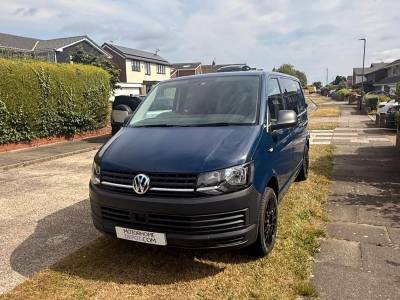
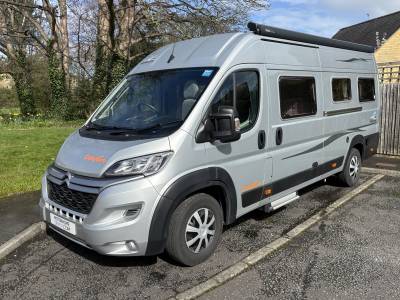
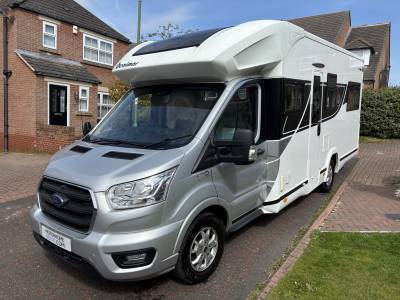
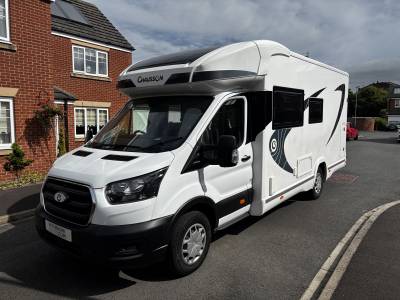
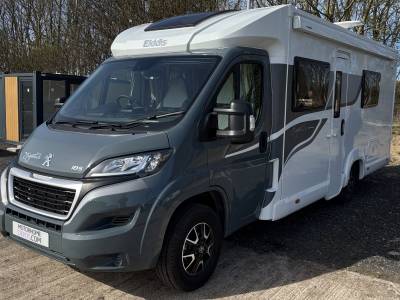
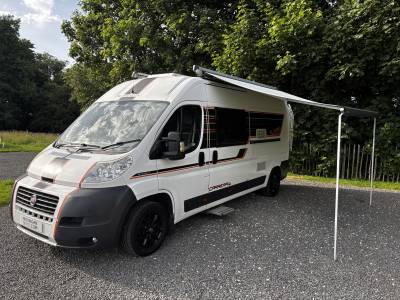
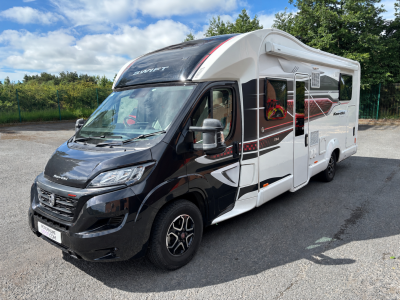
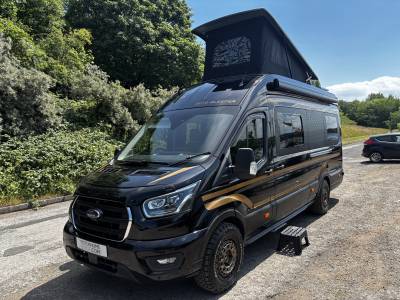
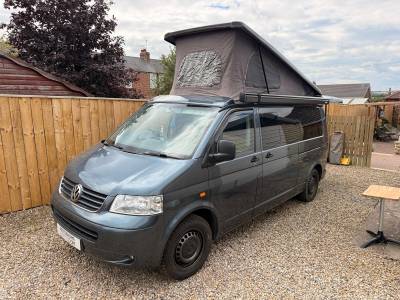
Looking to buy a motorhome in your local area? We are the local specialists and offer a wide range of motorhomes across a range of sizes and prices. We have motorhomes for sale in Durham. We offer campervans in Chester-le-Street and Newton Aycliffe. Check out our range of motorhomes in Washington.
Durham (/ˈdʌrəm/ ⓘ DURR-əm, locally /ˈdɜːrəm/ ⓘ)[a] is a cathedral city and civil parish in County Durham, England. It is the county town and contains the headquarters of Durham County Council, the unitary authority which governs the district of County Durham.[3][4] The built-up area had a population of 50,510 at the 2021 Census.[2]
The city was built on a meander of the River Wear, which surrounds the centre on three sides and creates a narrow neck on the fourth. The surrounding land is hilly, except along the Wear's floodplain to the north and southeast.
Durham was founded in 995 by Anglo-Saxon monks seeking a place safe from Viking raids to house the relics of St Cuthbert. The church the monks built lasted only a century, as it was replaced by the present Durham Cathedral after the Norman Conquest; together with Durham Castle, it is a UNESCO World Heritage Site. From the 1070s until 1836 the city was part of the County Palatine of Durham, a semi-independent jurisdiction ruled by the prince bishops of Durham which acted as a geopolitical buffer between the kingdoms of England and Scotland. In 1346, the Battle of Neville's Cross was fought half a mile west of the city, resulting in an English victory. In 1650, the cathedral was used to house Scottish prisoners after their defeat at the Battle of Dunbar.[5] During the Industrial Revolution, the Durham coalfield was heavily exploited, with dozens of collieries operating around the city and in nearby villages. Although these coal pits have now closed, the annual Durham Miners' Gala continues and is a major event for the city and region. Historically, Durham was also known for the manufacture of hosiery, carpets, and mustard.[6]
The city is the home of Durham University, which was founded in 1832 and therefore has a claim to be the third-oldest university in England. The university is a significant employer in the region, alongside the local council and national government at the land registry and passport office. The University Hospital of North Durham and HM Prison Durham are also located close to the city centre. The city also has significant tourism and hospitality sectors.[7]
The River Wear flows north through the city, making an incised meander which encloses the centre on three sides to form Durham's peninsula. At the base of the peninsula is the Market Place, which still hosts regular markets; a permanent indoor market, Durham Indoor Market, is also situated just off the Market Place. The Market Place and surrounding streets are one of the main commercial and shopping areas of the city. From the Market Place, the Bailey leads south past Palace Green; The Bailey is almost entirely owned and occupied by the university and the cathedral.
Durham is a hilly city, claiming to be built upon the symbolic seven hills. Upon the most central and prominent position high above the Wear, the cathedral dominates the skyline. The steep riverbanks are densely wooded, adding to the picturesque beauty of the city. West of the city centre, another river, the River Browney, drains south to join the Wear to the south of the city.
Chester-le-Street (/ˈtʃɛstəlistriːt/)[2][3] is a market town in County Durham, England. It is located around 6 miles (10 kilometres) north of Durham and is close to Newcastle and Sunderland.[4] The town holds markets on Saturdays.[5][6] In 2021, the town had a population of 23,555.[7]
The town's history is ancient; records date to a Roman-built fort called Concangis. The Roman fort is the Chester (from the Latin castra) of the town's name; the Street refers to the paved Roman road that ran north–south through the town.[8] The parish church of St Mary and St Cuthbert is where the body of St Cuthbert remained for 112 years (from 883 to 995 AD), before being transferred to Durham Cathedral. An Old English translation of the Gospels was made in the 10th century: a word-for-word gloss of the Latin Vulgate text, inserted between the lines by Aldred the Scribe, who was Provost of Chester-le-Street. [9]
There is evidence of Iron Age use of the River Wear near the town,[18] Concangis was built alongside the Roman road Cade's Road (now Front Street) and close to the River Wear, around 100 A.D., and was occupied until the Romans left Britain in 410 A.D. At the time, the Wear was navigable to at least Concangis and may also have provided food for the garrisons stationed there.[19]
ln 883, a group of monks, driven out of Lindisfarne seven years earlier, chose a base at Chester-le-Street, having been gifted a church by the Danish king, Guthred.[20][21] They built a shrine to St Cuthbert, whose body they had borne with them. It became the seat of the Bishop of Lindisfarne, making the church a cathedral. There, the monks translated the Lindisfarne Gospels into English. They stayed for 112 years, leaving in 995 for a safer home in Durham.[22] The title has been revived as the Roman Catholic titular see of Cuncacestre.
The church was rebuilt in stone in 1054 and, despite the loss of its bishopric, seems to have retained a degree of wealth and influence. In 1080, most of the huts in the town were burned and many people killed in retaliation for the death of Walcher, the first prince-bishop, at the hands of an English mob. The town was not recorded in the Domesday Book of 1086.[23]
Cade's Road did not fall out of use but was hidden beneath later roads which became the Great North Road, the main route from London and the south to Newcastle and Edinburgh. The town's location on the road played a significant role in its development, as well as its name, as inns sprang up to cater for the travelling trade. This trade reached a peak in the early 19th century as more people and new mail services were carried by stagecoach, before declining as railways became more popular. The town was bypassed when the A167 road was routed around the town and this was later supplanted by the A1(M) motorway.[24]
From the late 17th century onwards, coal was dug in increasing quantities in the region. At the same time, the growth of the mines and the influx of miners supported local businesses, not just the many inns but new shops and services, themselves bringing in more people to work in them. These people would later work in new industries established in the town to take advantage of its good communications and access to raw materials.[25]
The population at the time of the 1841 census was 2,599 inhabitants.[26]
On the evening of 5 October 1936, the Jarrow Marchers stopped at the town centre after their first day's walk. The church hall was used to house them before they continued onward the following day.[27]